 Ocular
Histoplasmosis is caused by the dimorphic yeast,
Histoplasma capsulatum. This common fungus is found
in molds from soil enriched with bat, chicken or starling
droppings. The eye is not a common site of infection, it is
thought spores travel from the lungs to the eye via the
blood stream, ultimately infecting the choroid, the layer of
tiny blood vessels that provides blood supply to the retina. Ocular
Histoplasmosis is caused by the dimorphic yeast,
Histoplasma capsulatum. This common fungus is found
in molds from soil enriched with bat, chicken or starling
droppings. The eye is not a common site of infection, it is
thought spores travel from the lungs to the eye via the
blood stream, ultimately infecting the choroid, the layer of
tiny blood vessels that provides blood supply to the retina.
Ocular histoplasmosis develops when new and abnormal blood
vessels grow under the retina. This abnormal and reactive
vascular proliferation forms a lesion known as choroidal
neovascularization (CNV). If left untreated, the CNV lesion
can turn into scar tissue and replace the normal retinal
tissue in the macula. Other than antifungal antibiotics,
laser surgery, known as photocoagulation, is used to
obliterate the neovascularized tissue. |
|
|
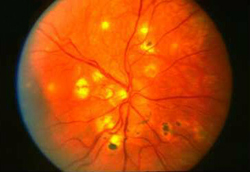
Histoplasmosis
Retinitis |
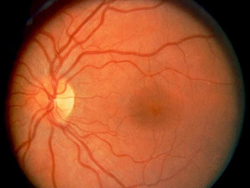
Healthy Retina |
|