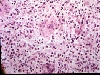
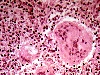
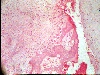
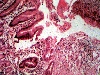
General and Systemic Histopathology, C601&C602 Inflammation and Repair In this section you will
learn to recognize specific types of inflammatory cells and infiltrates in
a histological setting. I am sure you will gain an appreciation for how different
the histology will be in the diseased state. Cells and tissue morphology that
you may feel quite familiar with, will have a substantially different appearance.
After this exercise, you should be familiar with appearance and components
of an acute and chronic inflammatory infiltrate, as well as the major actors
in the repair process. You should also know the difference between an exudate
and transudate. Although the slides for study are listed in numerical order,
I recommend studying them in the following order: 27, 90, 48 and 19 first,
then go to 9 and 139, then the chronic inflammatory conditions 1, 76 and
77, and finish with the repair cases 7, 43 and 59. Good luck!
Next Laboratory | Table of Contents
Copyright 1998, the Trustees of Indiana University
|